Thursday, June 19, 2014

BACKPACKS ARE FOR DORKS


L to R...first and 3rd model 

3rd model with 45 holster 


Variations on holster 


position and components for the 3rd model 

Reliance ,the famous shirt maker,was the subcontractor for Sears but also a major parachute manufacturer 

Another major player commonly seen 


Even if the C-1 vest was still in use during the early days of the vietnam war, most of the surplus stocks ended up being sold to fish and game enthusiasts through various mail order catalogs,just like combat boots ,tents and flight jackets ...


Backpacks are for dorks .It was true back then and still is .....i'm sorry

So how about giving you guys a "still affordable" alternative!? that can also be a nice addition to your Mister freedom  sea hunt gear.....

So here it is :the ww2 AAF type C-1  sustenance survival vest .It's the perfect alternative ,that'll allow your average "busy bee" to carry all the necessary tools that clutter our lives and that we think we can't live without .......

The C-1 "survival" vest was developed around 1943.The vest has seen service by both Air forces and navy personnel from World War Two through Korea and to a limited extent in Vietnam. The vest was made of dark olive green tackle twill and weighted 11 pounds when complete with its contents.  There were three large buttons on the front for closure.  The vest was used alone and in conjunction with various seat and back pad survival kits which were also initially developed during the early stages of WW2.  The C1 vest was designed for use in all parts of the word, however, the C1 proved better suited to the tropical regions.

The C1 was issued in "one size fits all" being adjustable by 3 ties in the back.The vest was to be worn under the life vest, body armor and the parachute harness. This proved to be too cumbersome when worn in some theaters of operation. So a modified musette bag attached to the parachute harness was developed.

Three types of C1 vests are in circulation with the two earliest models having two front slant pockets secured by a large button.  The latest model had straight pockets opening from the top and secured by snap catches....

Tuesday, June 10, 2014

A MILE IN MY SHOES part9....70'S CONVERSE ALL STAR REPOP


The quintessential sneaker is back ...finally .
What took them so long !? now i want them in navy blue

Thursday, June 5, 2014

Tuesday, June 3, 2014

MUCH ADO ABOUT NOTHING......


It seems that there's been a trend lately on various forums,about how a war time A-2 repro should look to be "period correct" They've been taking about grain thickness and so on....In fact ,what people emulate nowadays and refer as "war horse" was mostly the result of original manufacturers taking the most out of every piece of hide that went into their cutter's hands.Using heavily broken grain and marked hides that would have been rejected or hidden during a pre or post war production. By hidden I mean mostly used for less visible spots such as the back of the sleeves or lower back sides, resulting in a more "plain" and attractive jacket for the costumer.Not so much of a priority for wartime production .
Nowadays it's really difficult to find hides with an heavily natural  broken grain, as tanneries have a tendency of rejecting such less attractive hides.....

To illustrate today's post about wartime hides,here's a nice WW2 seal brown heavily grained horsehide Type A-2: Aero Leather 42-18775-P ,the very last A-2 contract they made.
Aero Leather Clothing Co. of Beacon, NY had a good number of contracts for the Army Air Corps and Forces. Most of the jackets from this contract retain features of earlier Aeros designs like square pockets, a mustard colored lining, brown or green thread, but unlike the two earlier wartime contracts (W535-AC-21996 and 42-15142), jackets of this contract are usually made with pigment finish horsehide and brown knits.but  some jackets of this contract, like this example,were made with darker horsehide and red knits, common features of 2 earlier wartime contracts, and sort of a trademark of Aero A-2s.  

Monday, June 2, 2014

BEEN THERE DONE THAT ....


Just found this nice and salty example of a :"been there done that" WW2 HBT cap. it's just as i love to find them while hunting for cool vintage .A must on this lid,the rare USMC bakelite EGA screwed on the front .......

Thursday, May 22, 2014

THE SPIRIT OF ST LOUIS...


Celebrating the 87th anniversary of the first Transatlantic flight May 20th 1927 by the great Charles Lindberg with this rare French silk tapestry found a couple of month ago.In 1957 Lindberg offered a similar tapestry to Jimmy Stewart, Who played him,in "the spirit of st Louis" Movie...... 

On May 20, 1927, Lindbergh took off from Long Island, New York at 7:52 a.m. After a night of heavy rain, the weather had cleared. Lindbergh seized the opportunity to take off while a crowd of 500 spectators cheered him .
To keep the plane as light as possible, Lindbergh flew without a radio, navigational lights, gas gauges, or parachutes. He carried only a compass, a sextant, his maps of the area, and several fuel tanks. He had even replaced the pilot's chair with a lightweight seat.
Lindbergh flew through several storms in the North Atlantic. When darkness fell and exhaustion set in, Lindbergh brought the plane up to a higher elevation so that he could see the stars, keeping himself oriented. As fatigue swept over him, he stamped his feet, sang aloud, and even slapped his own face.
After flying through the night and the following day, Lindbergh finally spotted fishing boats and Ireland's rugged coastline. He had made it to Europe. At 10:24 p.m. on May 21, 1927, he landed at Le Bourget Airport in Paris and was stunned to find 150,000 people waiting to celebrate his remarkable accomplishment. Thirty-three and a half hours had passed since he had taken off from New York.

Hailed as a hero, the shy young pilot from Minnesota was unwillingly thrust into the public eye. Lindbergh's unwelcome fame would later haunt him when his infant son was kidnapped for ransom and killed in 1932.

Tuesday, May 20, 2014

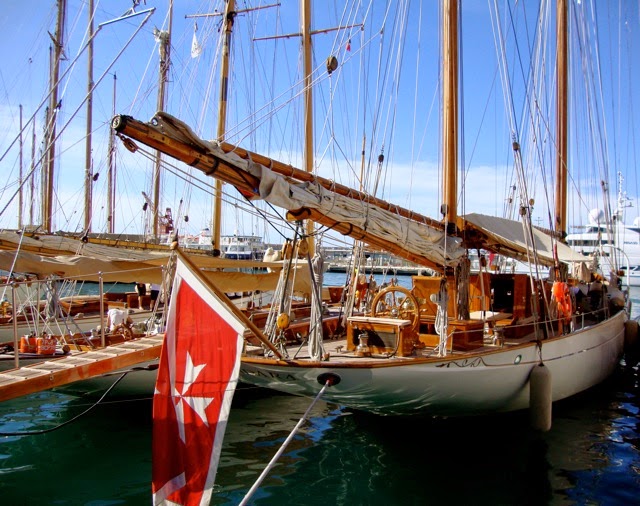
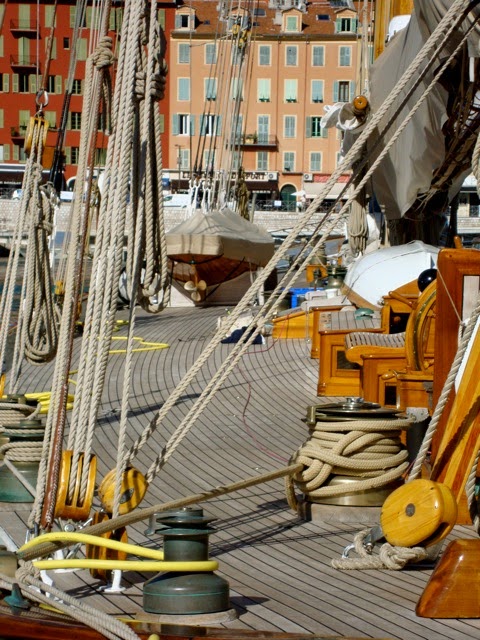
The colors of Nice


Last September for an entire week,these beauties flocked in the port of Nice France, getting ready for the imminent start of the first day of the "old sails regatta " 
All morning i took some pictures  before their departure to the bay of Villefranche-sur-Mer later that day.They returned to their home port: Nice were they stayed mooring for us to enjoy  .....